// What we do
OT supply chain intelligence, built from the inside out.

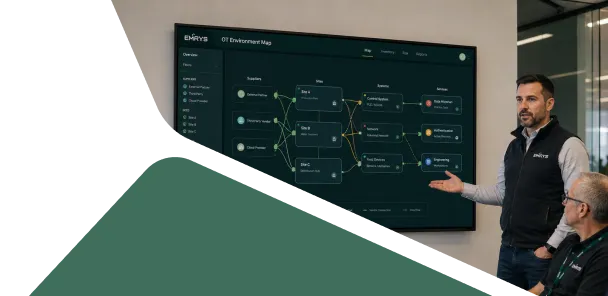
EMRYS maps the digital thread connecting suppliers, OT systems, sites and critical services, so you can see the whole chain, prove control and act before disruption.
// The Capability
Data-led. Intelligence-led. Operationally grounded.
OT supplier dependency mapping is often attempted manually, through fragmented spreadsheets, point-in-time reviews and institutional knowledge. EMRYS turns that fragmented information into a structured dependency model that can be used by security, resilience and operational teams.
EMRYS works with the data organisations already hold, reconciles it against operational reality and creates a dependency graph across four interconnected node types:
The operational outputs critical to delivery.

Services
Physical locations where systems are embedded.

Sites
The technology relied upon for operational delivery.

Systems
The vendors who build, support and protect those systems.

Suppliers
// What you get
Operational intelligence teams can act on.
EMRYS turns fragmented supplier, system, site and service data into a clear operational picture of your OT supply chain, helping teams protect continuity, evidence control and prioritise action.

Keep critical services running
Protect operational continuity by knowing and controlling what your OT supply chain depends on.

Know what breaks
Assess blast radius before an incident. Understand what fails operationally if a supplier is compromised, unavailable or goes down.

Prove control
Maintain an auditable record of OT supplier dependencies to support cyber resilience, supply chain governance, board reporting and emerging regulation.

See the whole chain
Create one reconciled view of which suppliers touch which OT systems, at which sites, and which critical services depend on them.

Surface hidden risk
Expose supplier concentration, dependency clusters and single points of failure before they become incidents.
// Why us
EMRYS is not another risk platform.
Purpose-built for OT and ICS
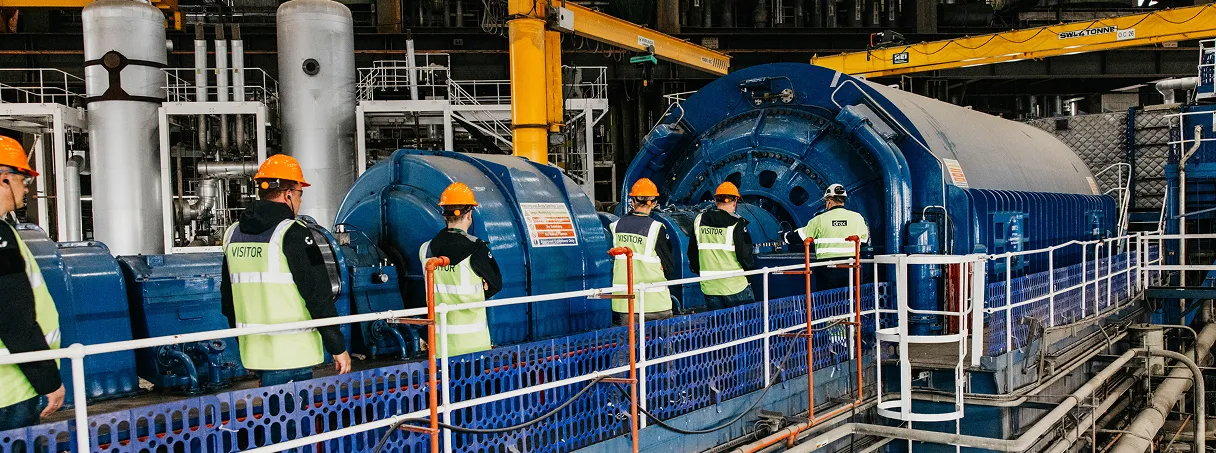
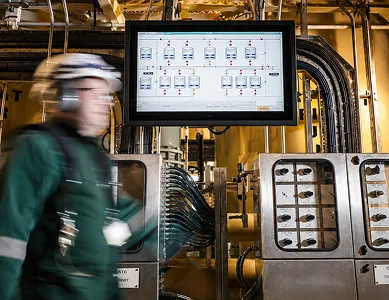
EMRYS is not a generalist vendor-risk platform with industrial coverage bolted on. It is designed from first principles for the systems, environments and threat landscape unique to critical infrastructure operations.

Inside-out, not outside-in
EMRYS builds a live dependency model from inside the OT environment, resolving fragmented operational signals into connections no external scan can see and no organisation can map alone.

The only platform of its kind
EMRYS is the first platform built specifically to map the OT supply chain itself, focusing not on assets, risks or exposures in isolation, but on the supplier dependencies that connect to critical services.
Other tools often focus on…
Assets, vulnerabilities or alerts
Supplier records and questionnaires
External exposure
What exists in the environment
EMRYS focuses on…
The supplier dependencies behind critical OT systems
Whether declared dependencies reflect operational reality
The internal dependency chain across suppliers, systems, sites and services
What it depends on, who supports it and what could break if that dependency fails
// FAQs